Bill Smoot: San Quentin Exodus
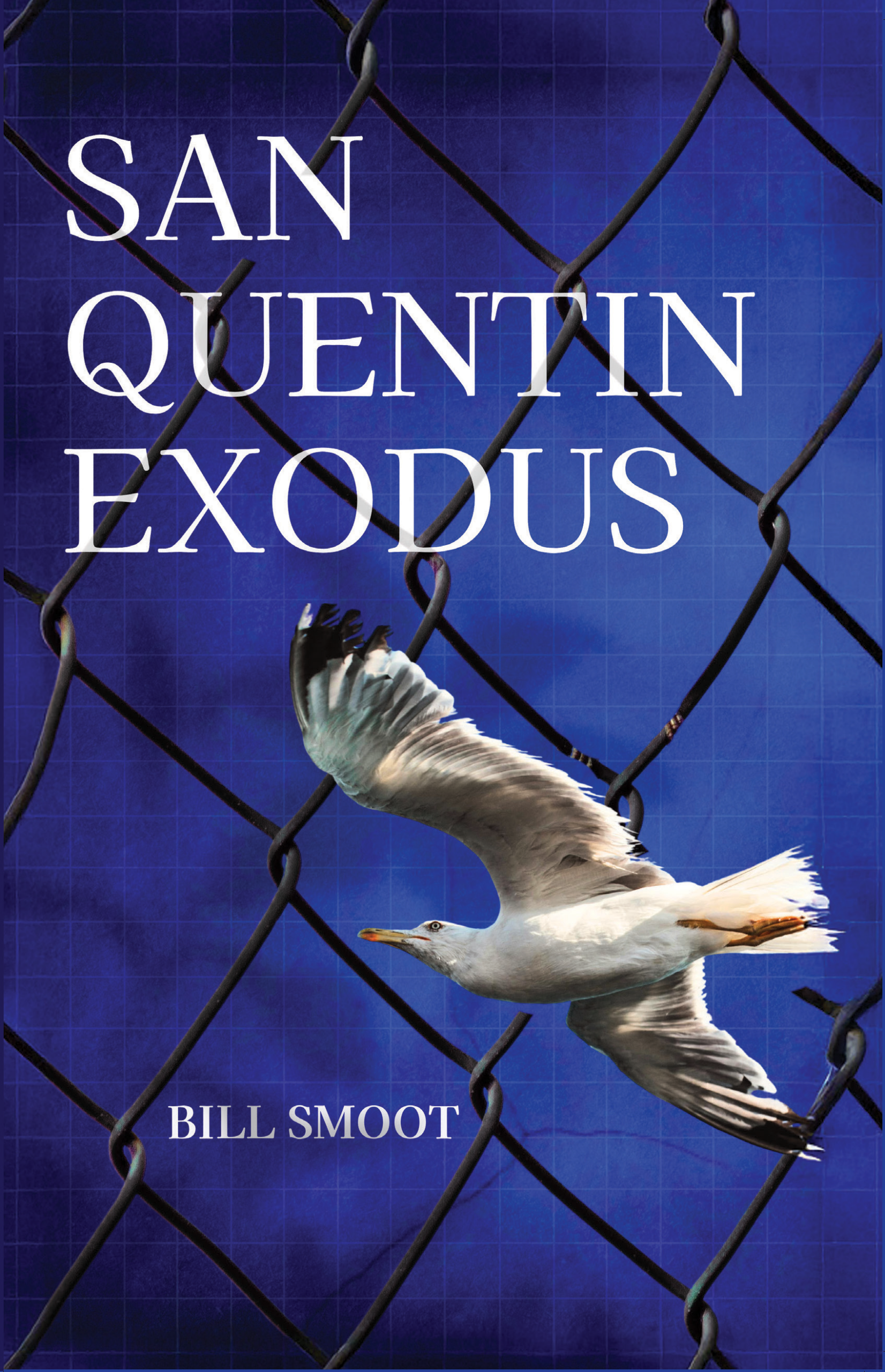
James grows up as a still-water-runs-deep boy struggling to navigate the barbed streets of Oakland, California. His only true friend is Spike, a pit bull he rescues from dog fighting. On the cusp of entering college, James commits a crime that results in a prison term of thirty to life.
Allison, a young Indiana girl obsessed with Nancy Drew novels, vows that her life’s mission will be to solve mysteries and help people. Introverted yet daring, Allison enters college, grows into her nascent identity as a lesbian, finds her life partner, moves to the West Coast to teach prep school, and volunteers as a tutor at San Quentin. She meets James, learns his story, and after his parole denial, channels Nancy Drew to plan his impossible escape.
San Quentin Exodus is a braided novel about two people whose lives cross in a quest to reset an ill-fated life. It is a story infused with pain, but also with a fierce humanity and hope.
PRAISE FOR SAN QUENTIN EXODUS
“San Quentin Exodus, Bill Smoot’s deeply compelling novel, introduces readers to the world of prison but really to the much bigger world of his characters’ lives, inviting us to follow the trajectory of each as it unfolds with surprise and mystery, love and loss. Like all good literature, San Quentin Exodus ultimately asks us to reconsider everything we believe—or think we believe. Smoot is the consummate storyteller: restrained, wise, compassionate.”
—Lori Ostlund, author of Are You Happy?
“In San Quentin Exodus, Bill Smoot takes us deeply into the world of incarceration and rehabilitation, with its pitfalls and fragile possibility. Smoot has delivered two unforgettable characters whose encounter alters the trajectory of each of their lives. The social and economic circumstances that lead to the young James’s incarceration, and the disturbing story of his long tenure behind bars, suggest the abject limitations of our current penal system, while the well-intentioned Allison, who tutors James in the prison’s college program, draws upon the perspective of her own marginalization to risk everything in the story’s dramatic final act.”
—Angela Pneuman, author of Lay it on my Heart